What Your Poop Is Trying to Tell You.
Yes, we are going there.
Let me ask you a slightly awkward question:
Do yours sink or float?
Welcome to the glamorous side of functional medicine. 💁♀️
Here’s the thing most women are never told:
Your bowel movements can tell us an enormous amount about what’s happening inside your body.
In my practice, I ask about poop all the time. Not because I’m trying to embarrass anyone, but because digestion is foundational to everything from hormones and metabolism to inflammation, skin, energy, and even mood.
And honestly? Many women have been living with “not normal” digestion for so long that they assume their symptoms are just part of aging.
They’re not.

What Does a “Healthy” Bowel Movement Look Like?
Ideally, you should be having:
1–3 bowel movements daily
Well-formed
Easy to pass
Medium brown in color
Minimal wiping
And yes… they should generally sink
Not once every three days.
Not tiny rabbit pellets.
Not “I’ll go eventually.”
Your body was designed to eliminate waste efficiently.
When digestion and elimination slow down, your body can start recycling hormones, toxins, and inflammatory compounds that should have left the building.
Floating Stool: What Does It Mean?
One occasional floater after a heavy meal? Probably not a big deal.
But stool that frequently floats can suggest that fats are not being properly digested or absorbed.
That can happen when:
Bile flow is sluggish
Gallbladder function is compromised
Stomach acid is low
Digestive enzymes are insufficient
Fat digestion is impaired
This matters because healthy fats are critical for:
Hormone production
Brain health
Blood sugar stability
Skin health
Reducing inflammation
If fats aren’t being broken down properly, you may not be absorbing nutrients efficiently either.
Color Gives Us Clues Too
Your stool color can offer helpful insight into digestion.
Ideally:
A healthy stool is usually medium to dark brown, thanks to bile production.
Pale, gray, or clay-colored stool:
May suggest reduced bile flow or gallbladder dysfunction.
Green stool:
Can happen when food moves too quickly through the digestive tract, giving bile less time to break down fully.
(And yes, sometimes it’s just the giant green smoothie. We always look at context.)
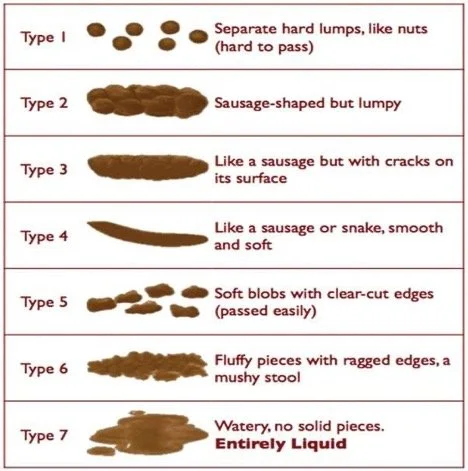
The Bristol Stool Chart: The Gut Health Cheat Sheet
The famous Bristol Stool Chart is one of the quickest ways practitioners assess bowel health.
Here’s the simplified version:
Type 1–2: Constipation
Type 3–4: Ideal 👏
Type 5–7: Loose stool or diarrhea
The goal is smooth, formed, and easy to pass without straining.
Simple? Yes.
But incredibly informative.
Why Midlife Women Often Struggle With Digestion
This is where things get interesting.
As women move through perimenopause and menopause, several things can shift:
Lower stomach acid
Slower motility
Increased stress and cortisol
Blood sugar dysregulation
Changes in the microbiome
Reduced digestive enzyme output
Add years of dieting, stress, antibiotics, processed foods, poor sleep, or rushing meals… and digestion can quietly start breaking down.
Many women don’t realize that symptoms like:
Bloating
Constipation
Loose stools
Reflux
Fatigue after eating
Food sensitivities
Brain fog
Hormone imbalance
…can all trace back to the gut.
Let’s Talk About Wiping (Because Nobody Else Will)
If it takes half a roll of toilet paper to clean up every time…
that’s usually a sign something isn’t being fully digested or formed properly.
There. I said it.
And yes, after traveling through Europe and discovering how common bidets are overseas, I finally added a bidet attachment at home.
Life-changing. Highly recommend. 😏
Simple Ways to Support Better Digestion Naturally
The good news? The body is incredibly responsive when we support digestion properly.
Here are a few simple places to start:
1. Eat More “Wet Fiber”
Think:
Green apples
Cucumbers
Celery
Radishes
These foods help support hydration and motility naturally.
2. Add Soaked Chia or Basil Seeds
These provide gentle soluble fiber that can help support bowel regularity and stool formation.
Add to:
Smoothies
Yogurt
Overnight oats
3. Hydrate Properly
Your colon needs water to move waste effectively.
Many women are walking around mildly dehydrated and wondering why they feel sluggish and constipated.
4. Support Digestion Upstream
Sometimes the problem isn’t fiber.
Sometimes it’s poor breakdown of food in the first place.
This is where targeted support like digestive enzymes, bitters, stomach acid support, or probiotics may help—depending on the person.
A Probiotic I’m Loving Right Now
You know I’m a fan of rotating probiotic strains rather than staying on the same one forever.
One I’ve been liking lately is:
Trim & Glow – GLP-1 Probiotic+ by CodeAge
I like it because it supports:
Gut balance
Metabolic signaling
Digestive regularity
Healthy elimination
(You’ll find it in my Fullscript dispensary - https://us.fullscript.com/welcome/redeemingwellness)
Final Thoughts
Your poop is not random.
It’s feedback.